071 - Engineering

Courses tagged with "071 - Engineering"

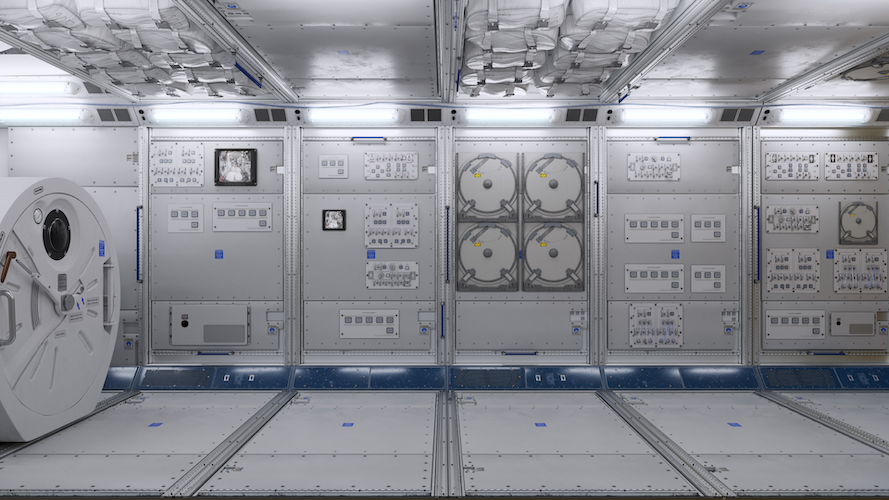
While humankind is only at the beginning of the space era, we already cannot leave our everyday life without satellite services or space-inspired technologies, not even to mention security issues.

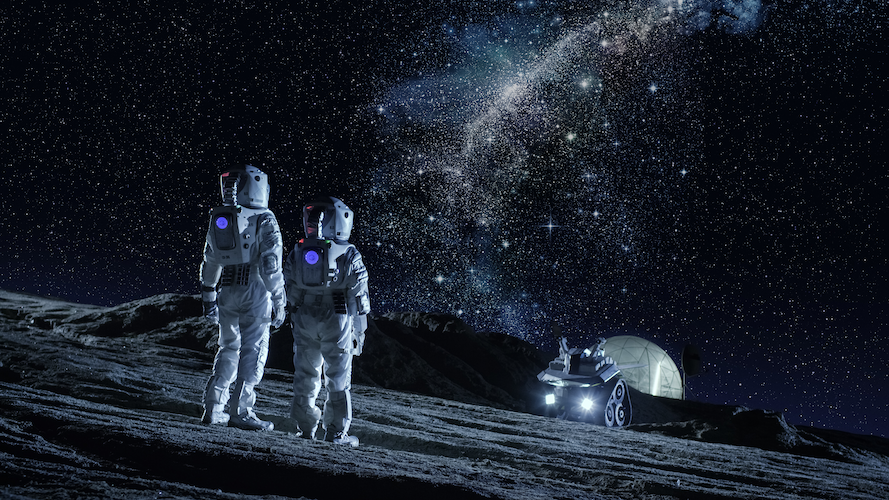
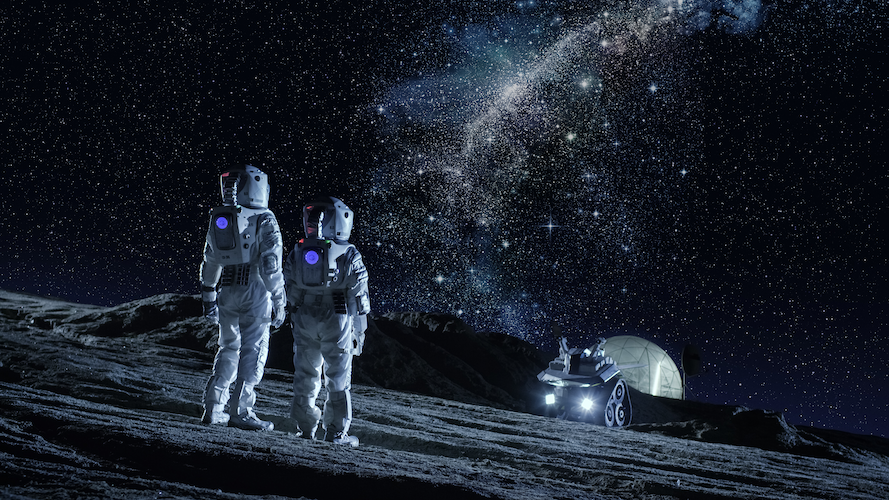
Space may seem like a dreamy destination… but you will not get there on a scooter. To explore the unknown and prepare for humanity’s future on Earth and in the harsh conditions of space, bravery alone isn’t enough. You also need talent, skills, and passion in various fields. Space activities and technologies are part of our everyday lives, and it’s not just about rockets and satellites. It also involves law, business, politics, security, the environment, robotics, medicine, and fundamental science, to name just a few.


The goal of this school is to raise the awareness of the participants about the space sector and its various facets, ranging from engineering and scientific aspects to its technological and societal impacts.

The school includes preparatory on-line lectures before the spring school in Belgium. There, you will hear and meet experts in various space fields and learn about professional or societal perspectives. You will also discover the work of ESA and its infrastructures in Redu. Finally, you will participate to funny astronaut training activities in Euro Space Center to build new friendships across the alliance.

Do not let your space access to be confiscated : the first step to claim your part of the space era starts here.

Category: 2025-26

It’s hard to imagine long-lasting manned space missions without personalized healthcare provided onboard, and it is hard to imagine modern space healthcare without engineering and technology. In this course students will get an overview of current trends and challenges in medical technology for space. The course focuses on the technologies which are currently in use and on technologies which might make long-term space-flights possible in the near future. All the aspects are presented both in a general and a specific manner through several practical scenarios.

Category: 2025-26

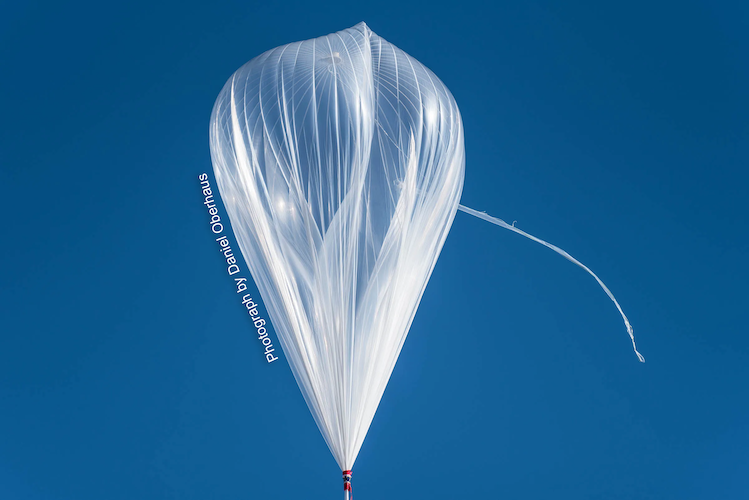
This is a project- based course in which students run a regular high-altitude balloon program going through an entire cycle of a space mission. They start by analyzing previous stratospheric balloon missions developed by students. Then in small specialized teams they tackle the various aspects of a space mission: mechanical, thermal, electric architecture; attitude control and navigation (passive), power generation and management, on-board data handling, data telemetry, payload operation and data acquisition, as well as project management. After having chosen one or several science objectives, the students design, build and test (including vacuum and cryogenics) their payload to study the atmosphere or to test a new technology in space. By the end of the first semester, the balloon payload is then launched from Aire-sur-l'Adour in collaboration with the balloon division of CNES (and/or in Kiruna with SNSA).

The main goal of this course is to create an environment in which students can plan and perform a balloon project mission with a scientific payload and critically select and evaluate relevant scientific and technical information within the subject. After completing the course, the students will be able to define primary and secondary objectives for their mission by writing detailed specifications and an efficient working flow package. Students will be also able to analyze and propose future improvements and developments and identify further knowledge needs and take responsibility for self- knowledge progress. Students will also have experience of writing proposals to the French Space Agency (CNES), and/or Swedish Space Agency SNSA.

Skills:
Systems engineering, project management, solving conflicting constraints, writing space documentation and reports.

Category: 2025-26

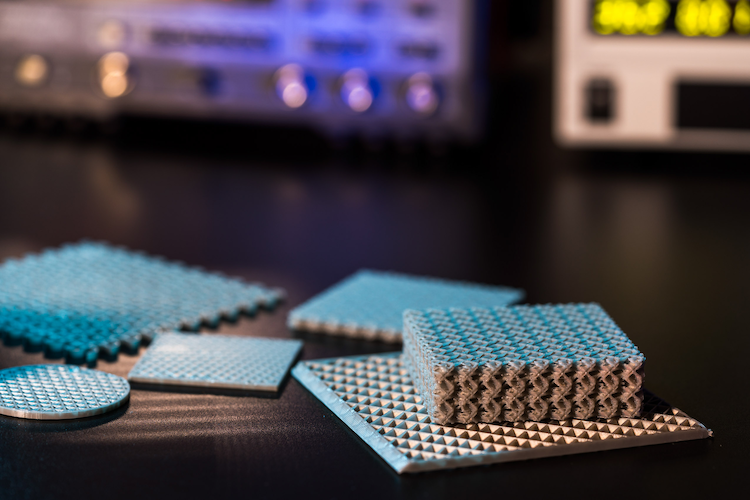
Mechatronic space structures require particular solutions in terms of their efficiency, robustness and precision for equipment which is required to operate for several decades without maintenance. In this context the piezoelectric technology associated with particular material properties can bring multidomain solutions for actuation, mechanical insulation, or energy harvesting. New opportunities in terms of dynamical mechanical response are brought by elastic metamaterials.

Metamaterials are a new class of materials that exhibit extraordinary properties. In the context of dynamics, they can display negative effective mass and/or stiffness, extending the classical design space of engineering materials. Therefore, they can be very attractive for designing high-performance multipurpose devices.

In this course students will learn about applications of elastic metamaterials for various mechatronic space devices, in particular energy harvesters, actuators, sensors and electro-mechanical transformers; and how metamaterials can be designed and used for substantially improving dynamic properties of these systems. students will have an opportunity to design a device - from theoretical principles to simulations - prototyping it and performing its physical electro-mechanical testing.

The course is composed of 8 classes in which we present the necessary theoretical and practical background, followed by a 4-class students’ project oriented on designing, assembling and testing a prototypical device. Finally, students are involved in an industry-level project supported and supervised by top-class experts from the space sector.

Category: 2025-26

In a fast-growing space environment, there is a crucial need to cross-combine skills and expertise to speed up space project development, be it in terms of technical/technological, business or legal acumen. Time has come to interact and work in a collaborative and comprehensive way and from the outset between all key stakeholders.

This course aims at providing to the participants, whatever their educational or cultural background, not only a "common language" but also an efficient working culture combining technical, legal and business dimensions, enabling them to work more efficiently on the design and development of space-related projects, with a shared mindset.

A key feature of the course is the blend of students of different backgrounds, combined with eye-opening course material; with this configuration, interdisciplinarity is total. The subjects treated will focus on giving the students the opportunity to engage in both the entrepreneurial challenges associated with innovation and start-up marketing; as well as the legal and business issues associated with space economy and intellectual property.
Category: 2025-26