053 - Physical sciences

Courses tagged with "053 - Physical sciences"

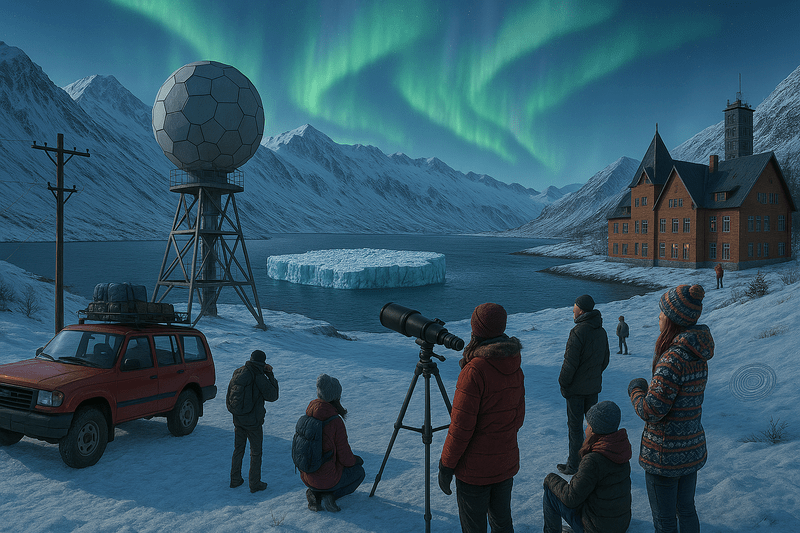
Arctic Winter School is an introductory course for students from different academic fields and from all UniversEH partner universities that gives insight into the interdisciplinary fields of Arctic space, environment and culture:

  • Environment and society in the changing Arctic. The Arctic Five collaboration.
  • Polar atmosphere and its significance for solar-terrestrial interactions, space weather.
  • Auroral physics and observations.
  • Optical phenomena in the polar regions.
  • Snow and ice in different perspectives.
  • Arctic climate systems and climate change.
  •  Nano satellites and balloons for polar research.
  • Product innovation for Arctic space.
  • Terminology for New Space and polar research, linguistic aspect of intercultural communication.
  • Survival in the cold environment. 
The 1st week of the School is taking place at Luleå University of Technology, Kiruna Space Campus and includes lectures and workshops. During the week in Kiruna there will be study visits to Esrange Space Center, the Swedish Institute of Space Physics (IRF) and EISCAT Scientific Association. The week will also include study visits to Abisko Scientific Research Station, LKAB iron ore mine, ICEHOTEL in Jukkasjärvi. There will be both cultural and social activities.

The learning outcomes are assessed through assignments, workshops and project.

Category: 2025-26

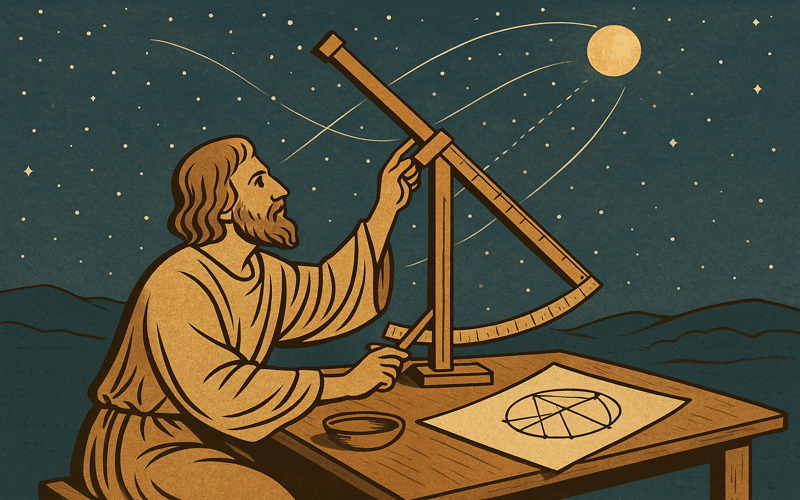
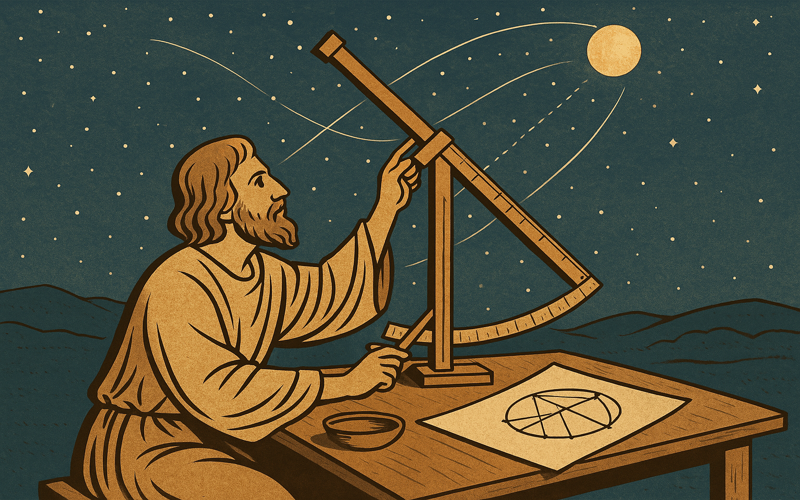
This is a project-base course in which students put themselves in the position of ancient astronomers and try to develop their own mathematical models in order to predict the position of one of the five planets that can be observed with the naked eye.

The main goal of the course is for students to experiment the scientific method: confronting tough questions, making small but incremental progress and taking advantage of feedback.

The historical field will be the students' playground. The first courses will explain some of the ancients findings on mathematical astronomy such as the neo-babylonians’ zig-zag functions and Ptolemy’s geometrical models. Then students will choose one planet, one location, and one period of time and will produce their own models and confront them to the real motions of the planet using the Stellarium software.

The range of the historical discussion will go from the middle of the third millennium BP to Einstein’s breakthrough in the early twentieth century: the questions of the ancient astronomers may be seen as natural ones, their answers may be seen as cultural ones, but what is really at stake in this course is about the search for understanding what might not be understood and the long term process of mankind trying to figure it out.


Category: 2025-26