UNIVERSEH
  • Home
  • Get support
  • More
English ‎(en)‎
Deutsch ‎(de)‎ English ‎(en)‎ Français ‎(fr)‎ Italiano ‎(it)‎ Lëtzebuergesch ‎(lb)‎ Polski ‎(pl)‎ Svenska ‎(sv)‎
Log in
UNIVERSEH
Home
Get support
  1. Site pages
  2. Dictionary of Space Concepts

Dictionary of Space Concepts

Back

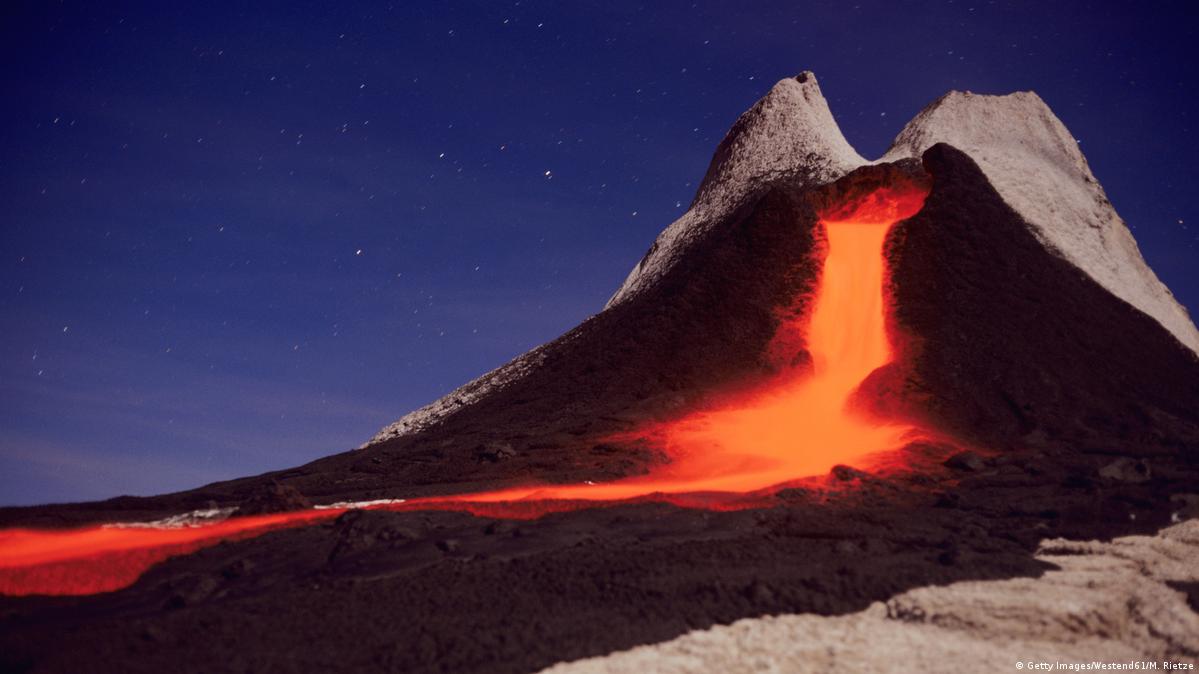
Volcano

(Last edited: Monday, 2 October 2023, 7:45 PM)

Image:

Image: Source: https://www.dw.com/en/volcanic-eruptions-can-cool-the-planet/a-40727123

Image: Source: https://www.dw.com/en/volcanic-eruptions-can-cool-the-planet/a-40727123

Short Definition:

A volcano is a hill or mountain with a hole where lava, rocks, or gas may be seen erupting from a planet or moon's interior.

Detailed Definition:

A crack in the earth's crust through which substances such as lava, steam, ashes, etc. are released continually or sporadically. Volcanoes are known to exist on the planets Mercury, Venus, Earth, the Moon, Mars, and the moon Io of Jupiter. Only two of these bodies currently have active volcanoes: Earth and Io. However, Venus or Europa, the moon of Jupiter, may have volcanoes erupting.

Etymology:

Volcano comes from the Latin Vulcanus, which is the name of the fire god.

Sample Sentence(s):

The volcano's lava was pouring down the mountainside.

On the seabed of Jupiter's moon Europa, there has been volcanic activity.

Translations of Terms/Concepts into Partner Languages

French: volcan

German: Vulkan

Polish: wulkan

Swedish: vulkan

Links to Videos/Articles:

https://earthobservatory.nasa.gov/topic/volcanoes

https://chandra.harvard.edu/press/10_releases/press_081810.html


» Dictionary of Space Concepts

Tags:
  • volcano
  • magma
  • eruption
◄ Site announcements
You are not logged in. (Log in)
Powered by Moodle
UNIVERSEH is an alliance of:
Université de Toulouse logo AGH logo UDUS logo LTU logo Uni.lu logo UNamur logo Tor Vergata logo

Co-funded by European Union

© Copyright UNIVERSEH 2026

Privacy notice information


All rights reserved. Funded by the European Union. Views and opinions expressed are however those of the author(s) only and do not necessarily reflect those of the European Union or the European Education and Culture Executive Agency (EACEA). Neither the European Union nor the granting authority can be held responsible for them.