UNIVERSEH
  • Home
  • Get support
  • More
English ‎(en)‎
Deutsch ‎(de)‎ English ‎(en)‎ Français ‎(fr)‎ Italiano ‎(it)‎ Lëtzebuergesch ‎(lb)‎ Polski ‎(pl)‎ Svenska ‎(sv)‎
Log in
UNIVERSEH
Home
Get support
  1. Site pages
  2. Dictionary of Space Concepts

Dictionary of Space Concepts

Back

Crater

(Last edited: Friday, 1 September 2023, 12:56 PM)
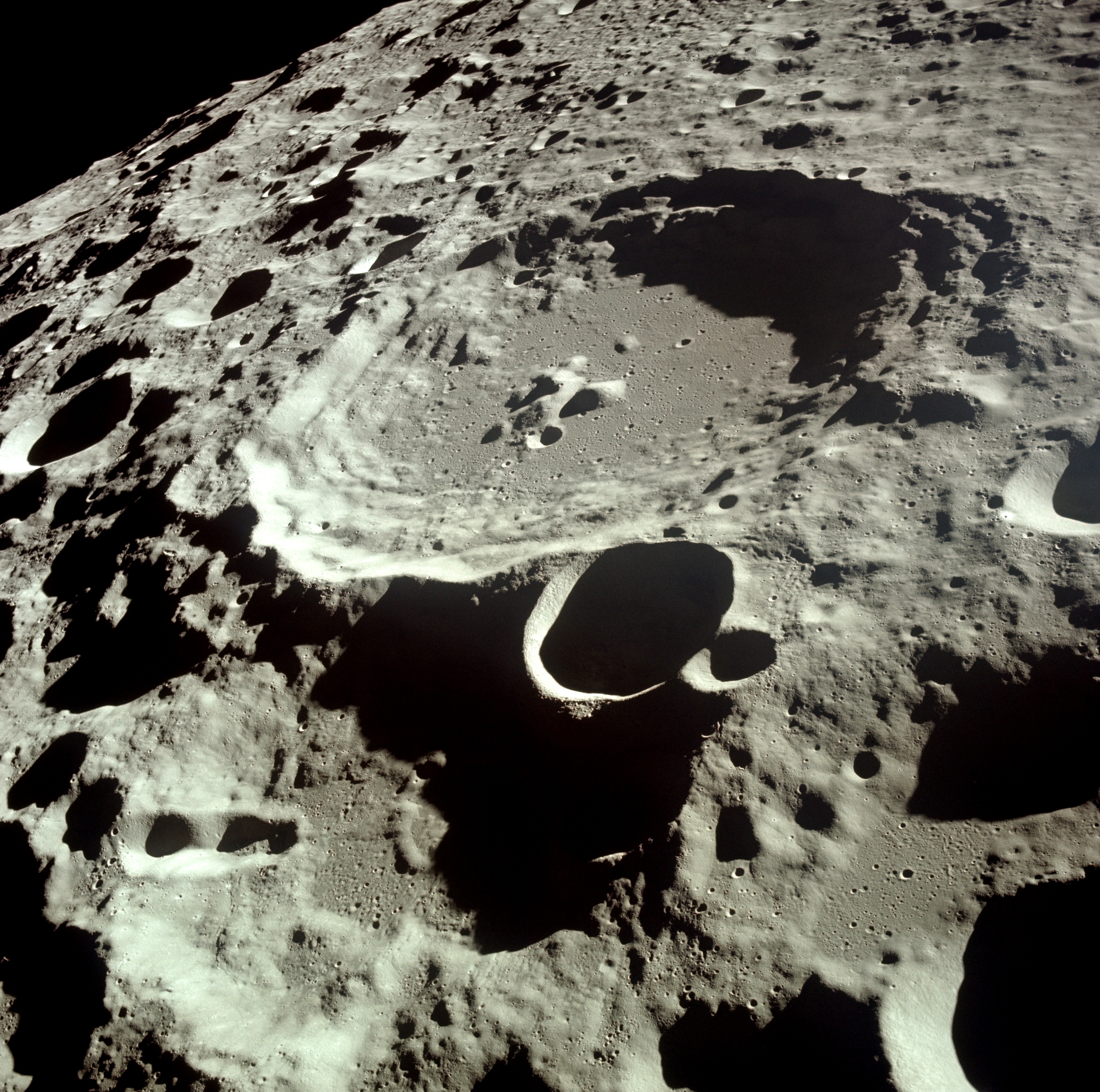
Dedal crater on the Moon Source: https://commons.wikimedia.org/wiki/File:Moon_Dedal_crater.jpg

Dedal crater on the Moon Source: https://commons.wikimedia.org/wiki/File:Moon_Dedal_crater.jpg

Short Definition:

An impact crater is a circular depression in the surface of a solid cosmic body shaped by the hypervelocity collision of a smaller object. Impact craters are the major geographic features on a lot of solid Solar System objects, including the Moon, Mercury, plus the majority of small moons and asteroids.

Detailed Definition:

An impact crater is a circular distortion on the surface of a celestial body caused by the collision of a meteorite, asteroid or comet. Craters are the most common features of the exterior of rocky and rock-ice bodies in the Solar System. The observed number of craters contains data about the age of the geological structure covered by them.  Impact craters should be distinguished from similar structures of other origin, for instance, volcanic craters.

Etymology:

First coined in 1613, from Latin crātēr (“basin”) and from Ancient Greek κρᾱτήρ (krātḗr, “mixing-bowl, wassail-bowl”).

Sample Sentence(s):

"Because of the many missions studying Mars since the 1960s, there is good coverage of its surface, which contains large numbers of craters."
"Complex craters have uplifted centers, and they have typically broad flat shallow crater floors, and terraced walls."
Source: https://en.wikipedia.org/wiki/Impact_crater

Translations:

French: 

Cratère

German:

Krater

Polish:

krater

Swedish:

Krater

Links to Videos/Articles:

704POGQFDoQ

Eld70QaHE6I

» Dictionary of Space Concepts

Tags:
  • planet
  • physics concepts
  • celestrial bodies
◄ Site announcements
You are not logged in. (Log in)
Powered by Moodle
UNIVERSEH is an alliance of:
Université de Toulouse logo AGH logo UDUS logo LTU logo Uni.lu logo UNamur logo Tor Vergata logo

Co-funded by European Union

© Copyright UNIVERSEH 2026

Privacy notice information


All rights reserved. Funded by the European Union. Views and opinions expressed are however those of the author(s) only and do not necessarily reflect those of the European Union or the European Education and Culture Executive Agency (EACEA). Neither the European Union nor the granting authority can be held responsible for them.