UNIVERSEH
  • Home
  • Get support
  • More
English ‎(en)‎
Deutsch ‎(de)‎ English ‎(en)‎ Français ‎(fr)‎ Italiano ‎(it)‎ Lëtzebuergesch ‎(lb)‎ Polski ‎(pl)‎ Svenska ‎(sv)‎
Log in
UNIVERSEH
Home
Get support
  1. Site pages
  2. Dictionary of Space Concepts

Dictionary of Space Concepts

Back

Asteroid

(Last edited: Friday, 1 September 2023, 12:40 PM)
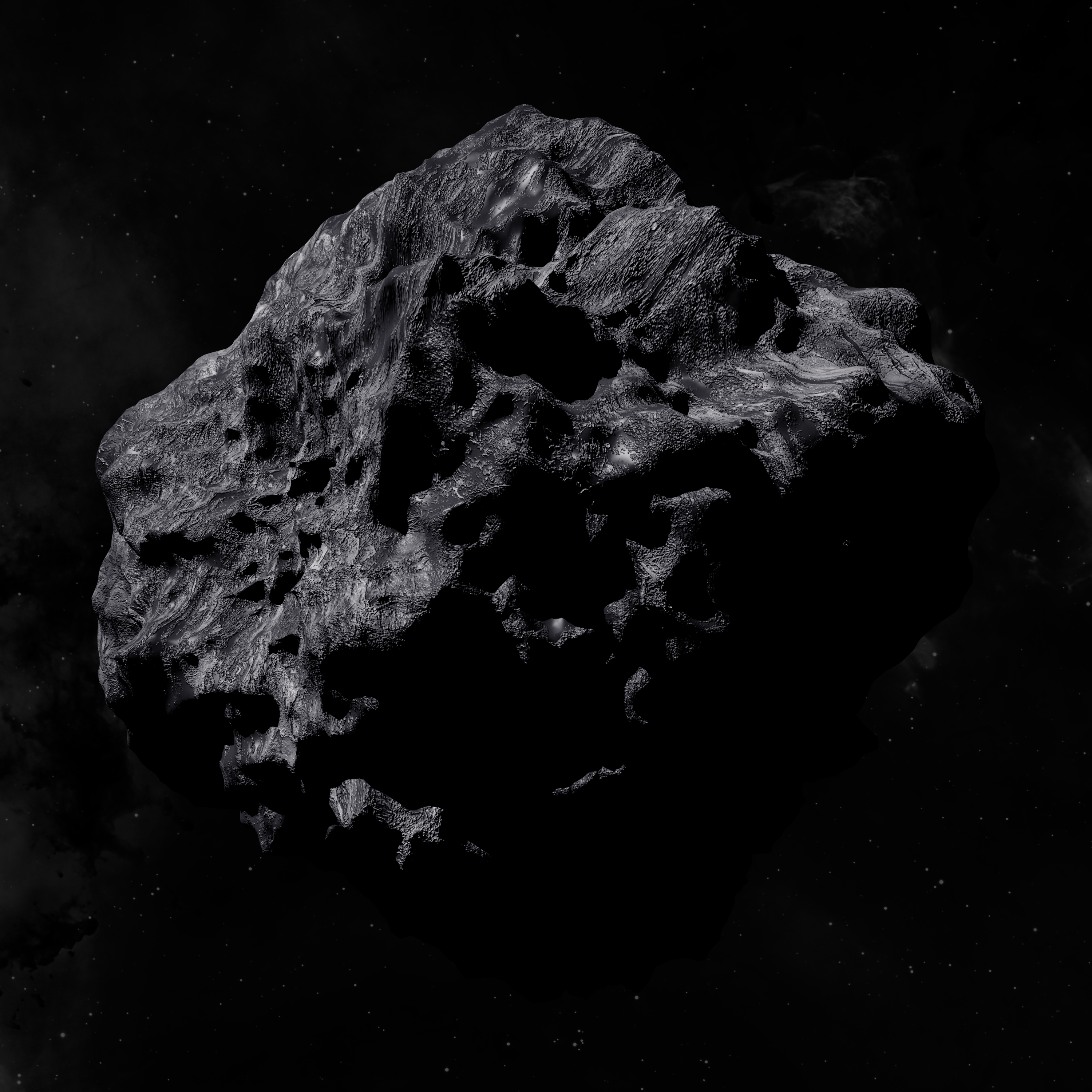
Source: Burned Pineapple Productions (2018, June 14). asteroid. flickr. https://www.flickr.com/photos/51686021@N07/42075207904

Source: Burned Pineapple Productions (2018, June 14). asteroid. flickr. https://www.flickr.com/photos/51686021@N07/42075207904

Short definition:  An asteroid is an astronomical object in direct orbit around the sun, also known as a “minor planet”. They can be rocky, metallic, or icy bodies with no atmosphere and range in a wide spectrum of sizes and shapes.


Long definition: An asteroid is an astronomical object in direct orbit around the sun, also known as a “minor planet”. They can be rocky, metallic, or icy bodies with no atmosphere and vary greatly in shape and size, from 1000 km to 1 m across. 

The three largest asteroids (Ceres, Vesta and Pallas) look very much like miniature planets by being almost spherical and containing some partly differentiated interiors. They are thought to be surviving protoplanets. Nevertheless, a wide majority of asteroids are smaller and irregularly shaped and are thought to be shattered remnants of planetesimals, which are bodies that never grew large enough to become planets within the formation of the solar system (solar nebula) or fragments of bigger bodies. 

The physical composition of asteroids is in most cases still poorly understood and varies from asteroid to asteroid. They are classified by their emission spectra and are divided generally in three big groups: C-type, M-type, and S-Type, named after their compositions carbon-rich, metallic, and salicaceous, respectively. In the main asteroid belt there are two primary types of asteroids: dark, volatile-rich asteroid consisting of the C-type and P-type, and  dense, volatile-poor asteroids consisting of the S-type and M-type asteroids.


Etymology: 
From Greek asteroeidēs ‘starlike’, from astēr ‘star’.


Sample Sentence(s):

  • A planet or asteroid in the solar system follows an elliptical orbit, with the sun at one focus.
  • Future discoveries and space missions would provide information about how to deflect an asteroid on collision course with Earth. 


Translations of Terms/Concepts into Partner Languages

  • French: Astéroïde
  • German: Asteroid
  • Polish: planetoida
  • Swedish: Asteroid
  • Spanish: Asteroide


Links to Videos/Articles:

What Are Asteroids, And Where Do They Come From?

  • Asteroid Risk Assessment: A Probabilistic Approach - DOI: 10.1111/risa.12453
  • The evolutionary and ecological benefits of asteroid and comet impacts - DOI: 10.1016/j.tree.2005.01.009 


» Dictionary of Space Concepts

Tags:
  • asteroid
  • minor planet
  • space rock
◄ Site announcements
You are not logged in. (Log in)
Powered by Moodle
UNIVERSEH is an alliance of:
Université de Toulouse logo AGH logo UDUS logo LTU logo Uni.lu logo UNamur logo Tor Vergata logo

Co-funded by European Union

© Copyright UNIVERSEH 2026

Privacy notice information


All rights reserved. Funded by the European Union. Views and opinions expressed are however those of the author(s) only and do not necessarily reflect those of the European Union or the European Education and Culture Executive Agency (EACEA). Neither the European Union nor the granting authority can be held responsible for them.