Passer au contenu principal
UNIVERSEH
  • Accueil
  • Get support
  • Plus
Français ‎(fr)‎
Deutsch ‎(de)‎ English ‎(en)‎ Français ‎(fr)‎ Italiano ‎(it)‎ Lëtzebuergesch ‎(lb)‎ Polski ‎(pl)‎ Svenska ‎(sv)‎
Connexion
UNIVERSEH
Accueil
Get support
  1. Pages du site
  2. Dictionary of Space Concepts

Dictionary of Space Concepts

Retour

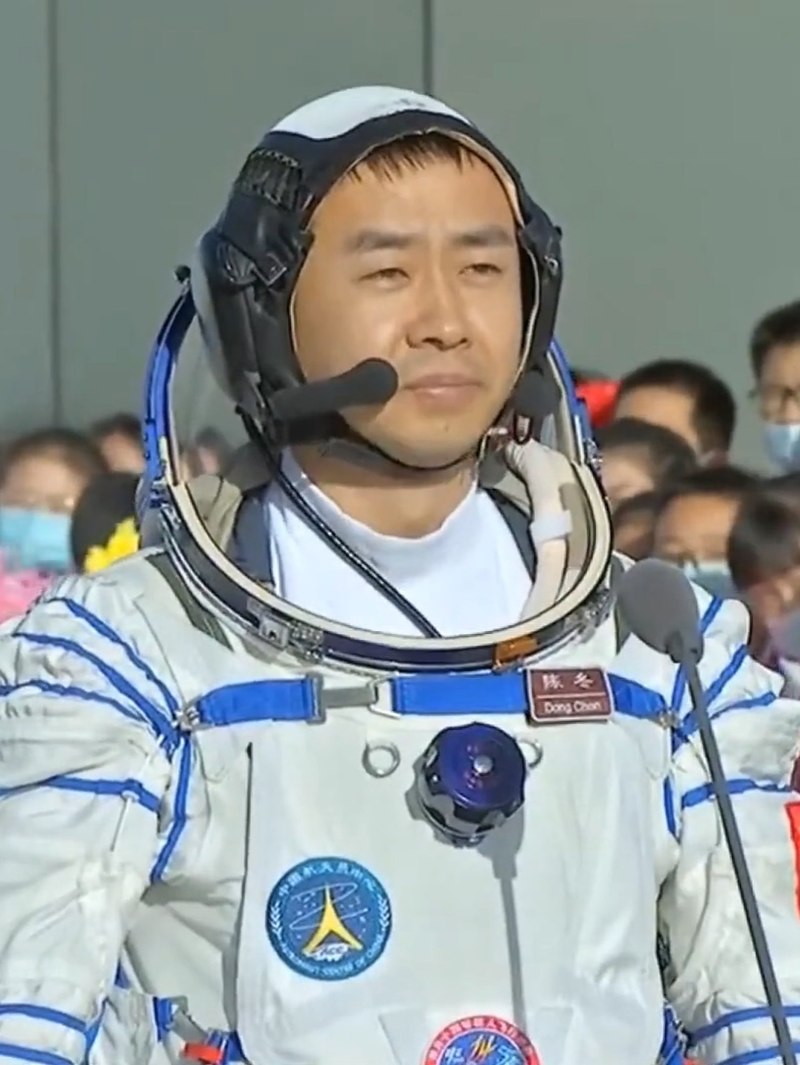
Taikonaute

(Modifié le: lundi 2 octobre 2023, 18:59)
Source : https://upload.wikimedia.org/wikipedia/commons/thumb/d/dd/%E8%88%AA%E5%A4%A9%E5%91%98%E9%99%88%E5%86%AC_Chen_Dong.jpg/800px-%E8%88%AA%E5%A4%A9%E5%91%98%E9%99%88%E5%86%AC_Chen_Dong.jpg

Source : https://upload.wikimedia.org/wikipedia/commons/thumb/d/dd/%E8%88%AA%E5%A4%A9%E5%91%98%E9%99%88%E5%86%AC_Chen_Dong.jpg/800px-%E8%88%AA%E5%A4%A9%E5%91%98%E9%99%88%E5%86%AC_Chen_Dong.jpg


Short Definition
A taikonaut is a Chinese astronaut who has experience in space exploration and is a member of Chinese space programme. Taikonauts participate in Chinese space missions, contributing to advancements in space exploration and scientific research.

Detailed Definition
China is the 3rd country, after Soviet Union and the United States to send a human into space in 2003. The first Chinese taikonaut, Yang Liwei, was launched into space aboard the Shenzhou 5 spacecraft. 


Etymology
The word "taikonaut" is a combination of the Chinese word "taikong" meaning "space" and the Greek suffix "-naut" meaning "traveller."

The term "taikonaut" is a term that refers to Chinese astronauts who are trained to participate in China's space missions. 

Taikonauts are selected from People's Liberation Army Air Force and undergo intensive physical and psychological training to prepare for the challenges of spaceflight. China plans to select and train more taikonauts for its future missions. 


Translations of Terms/Concepts into Partner Languages

French: un taïkonaute 

German: der Taikonaut

Italian: taikonauta

Polish: tajkonauta

Swedish: taikonaut


Translations of Terms/Concepts into other languages

Japanese

宇宙飛行士 (uchū hikōshi) or taikonaut (タイコノート)

Korean

태종 (taejong)

Russian

тайконавт (taikonavt)

Spanish

Taikonauta

Portuguese

taikonauta


Links to Videos/Article : 

https://upload.wikimedia.org/wikipedia/commons/thumb/d/dd/航天员陈冬_Chen_Dong.jpg/800px-航天员陈冬_Chen_Dong.jpg 

Example sentence:  

A dozen of handpicked Chinese astronauts, or taikonauts as they are called, are set to explore new horizons in space in four manned flight missions within two years. In the first of these missions, three taikonauts aboard the Shenzhou-12 spacecraft have already successfully made it to space.

CGTN.  2021. What does it take to be a taikonaut?  Retrieved May 29, 2023, from https://news.cgtn.com/news/2021-06-22/What-does-it-take-to-be-a-taikonaut--11hwXVttCww/index.html

Articles: 

VOA News Year: (n.d.) Title: Why China, African Nations Are Cooperating in Space Source: VOA News. Retrieved May 29, 2023, from https://www.voanews.com/a/why-china-african-nations-are-cooperating-in-space/6745595.html

Unknown. Year: 2022. China Launches New Crew to Space Station Source: The Washington Post.  Retrieved May 29, 2023 from https://www.washingtonpost.com/technology/2022/11/29/china-space-station-crew-launch/

Video: 

CGNT Chinese Global Television Network. 10. July 2021. Why are Chinese Astronauts called Taikonauts? Retrieved 18. June 2023 from 

4qAe3Y45uZs
. Retrieved  


» Dictionary of Space Concepts

Tags:
  • China
  • space race
  • military
  • cooperation in space
  • astronaut
  • Taikonaut
◄ Site announcements
Non connecté. (Connexion)
Fourni par Moodle
UNIVERSEH is an alliance of:
Université de Toulouse logo AGH logo UDUS logo LTU logo Uni.lu logo UNamur logo Tor Vergata logo

Co-funded by European Union

© Copyright UNIVERSEH 2026

Privacy notice information


All rights reserved. Funded by the European Union. Views and opinions expressed are however those of the author(s) only and do not necessarily reflect those of the European Union or the European Education and Culture Executive Agency (EACEA). Neither the European Union nor the granting authority can be held responsible for them.