
Our course “Critical Outer Space Studies: Seminar and Lecture Series” takes as its cue the increasing prevalence and visibility of both public (NASA, ESA, Artemis Accords) and private (SpaceX Blue Origins, etc.) endeavors that seek to explore, exploit, settle, and own outer space and its celestial bodies. Our course will pay particular attention to how, in recent years, the exploration of outer space has been invigorated via its role as a potential remedy for the challenges of the Anthropocene (via resource extractivism, resettlement, off-world heavy industry, observation of impacts of climate change on a global scale).
Using as a point of departure the notion that outer space is a social construct and as such entangled in terrestrial discourses such as colonialism, capitalism, territoriality, militourism, (among others), this class will engage the complex field of study that is the science and exploration of outer space through a variety of disciplinary lenses—particularly, but not exclusively, from the humanities—such as environmentalism, posthuman studies, mobility studies, astroethics, critical legal studies, discard studies, and postcolonial studies.
Participating students will have the unique opportunity to engage with the work of leading scholars and scientists in all of these fields through seminar sessions and their discussion of texts, films, reports and other material. The seminars will also prepare the accompanying guest lecture series, which allow the students to directly engage with leading scholars and scientists from diverse disciplinary backgrounds to explore the ethics and cultural discourses that surround the exploration of human space.
The course curriculum includes two field trips to HHU Düsseldorf and Université Toulouse -Jean Jaurès for the first and final sessions of class, respectively, which will be fully funded for enrolled students.
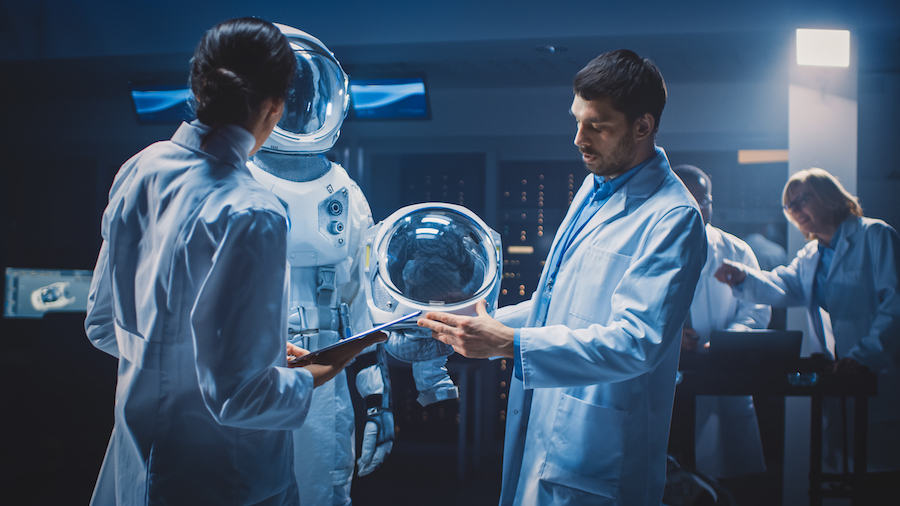
The language focus of this trilingual course will be decided at the beginning of the course and depends on the course participants. It will be co-taught by French and English native speakers, who are multilingual language teachers and fluent in German. We will include activities that develop the reading comprehension and speaking in particular. The topics we will explore are all space related (cooperation vs. space race, demographics of the space industry, space and sustainability, environmental aspects, innovation...). Participants will thus familiarise themselves with a transdisciplinary approach by dealing with themes that hardly ever appear within their respective curricula. Unlike a traditional language course, this course does not focus on the systematic acquisition of grammar but aims to highlight the parallels that can exist between different languages in order to improve the participants' language learning strategies and foster the emergence of a translanguaging awareness.
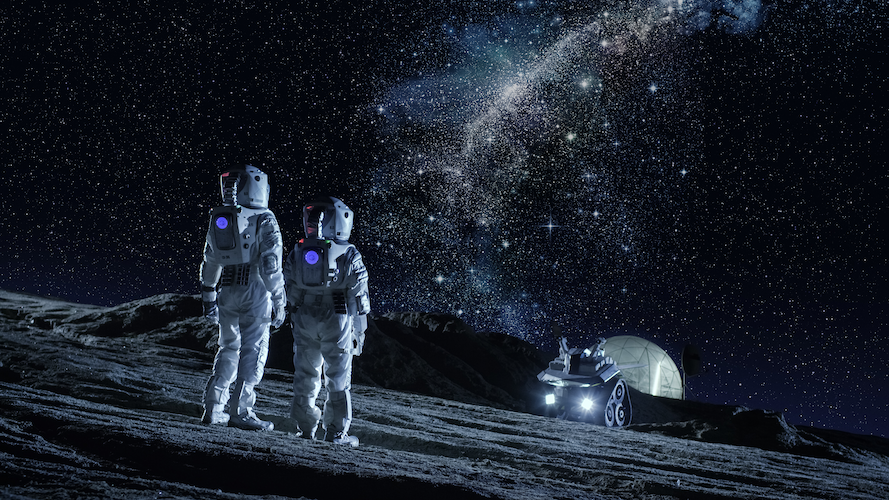
In a fast-growing space environment, there is a crucial need to cross-combine skills and expertise to speed up space project development, be it in terms of technical/technological, business or legal acumen. Time has come to interact and work in a collaborative and comprehensive way and from the outset between all key stakeholders.
This course aims at providing to the participants, whatever their educational or cultural background, not only a "common language" but also an efficient working culture combining technical, legal and business dimensions, enabling them to work more efficiently on the design and development of space-related projects, with a shared mindset.
A key feature of the course is the blend of students of different backgrounds, combined with eye-opening course material; with this configuration, interdisciplinarity is total. The subjects treated will focus on giving the students the opportunity to engage in both the entrepreneurial challenges associated with innovation and start-up marketing; as well as the legal and business issues associated with space economy and intellectual property.

This is a multidisciplinary course. Students will explore the world of Space, while improving their professional English for their future studies and employment opportunities. Participants will also understand terminologies and concepts for fields relevant to the space sector as part of the UNIVERSEH programme (e.g. "space, earth, natural sciences, medicine, humanities") and contribute to the development of an illustrated Dictionary of Space Concepts that we are developing in cooperation with the Computer Linguistics Dept. There will be many opportunities to practice different text styles, such as interviewing, biographical notes, reports, and reflection writing. As an online course, digital media are endemic to the classroom environment, and the synchronous meetings will be supplemented with asynchronous tasks that will help students prepare for class and apply their newly acquired knowledge and skills. Continuous cooperation, peer review, video creation, and illustrations for the DSC, will result in a tangible product at the end of the term.

At the fascinating intersection of cultural studies and social psychology aspects of the preoccupation with exocultures and UFOtherness (space-based figures of radical difference in the sense of Lewis & Kahn 2010) will be examined. The course will dive deep into the narratives that bridge the real and the imagined.
Key topics include:
- Analysis of the narrative interplay between factual reporting and fictional storytelling in human-alien encounters.
- Exploration of the line between engaging science fiction and controversial conspiracy theories that shape public perceptions of space.
- Comparative study of how various space programs, both public and private, envision interactions with extraterrestrial cultures, referred to as exocultures.
We aim to uncover the role these narratives play within societal discourse and examine the psychological motivations behind belief systems such as conspiracy theories relating to Earth and outer space, such as Flat Earth theory or Raelian beliefs.
The course emphasizes practical engagement through project work. Students will have opportunities to conduct field research, participate in interviews, and produce content in diverse formats such as podcasts, films, and theater productions. This program is particularly focused on engaging students from Romance, German, and English-speaking countries, fostering a rich, multicultural dialogue on these pressing topics.
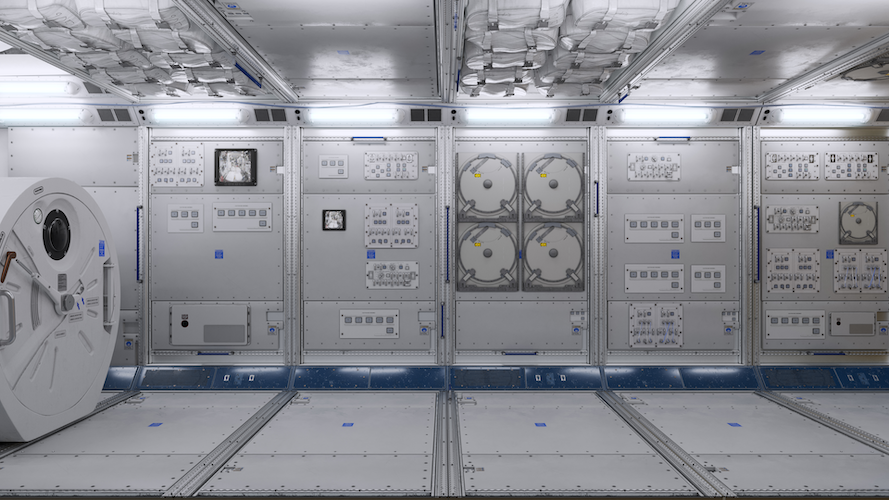
It’s hard to imagine long-lasting manned space missions without personalized healthcare provided onboard, and it is hard to imagine modern space healthcare without engineering and technology. In this course students will get an overview of current trends and challenges in medical technology for space. The course focuses on the technologies which are currently in use and on technologies which might make long-term space-flights possible in the near future. All the aspects are presented both in a general and a specific manner through several practical scenarios.
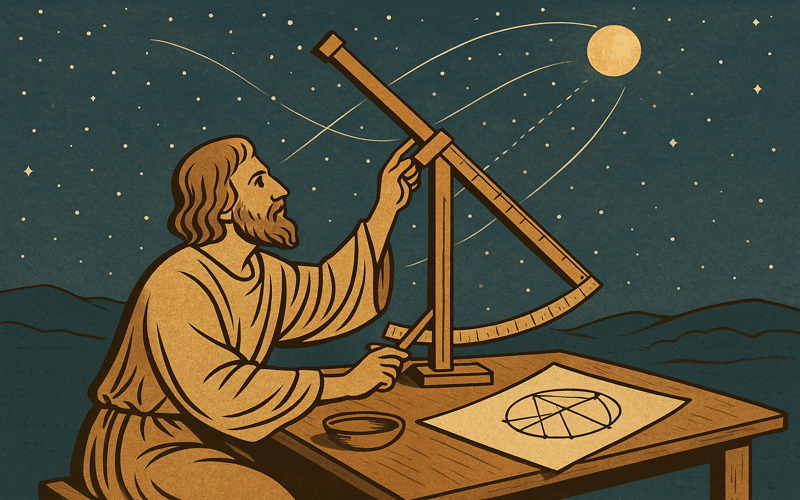
This is a project-base course in which students put themselves in the position of ancient astronomers and try to develop their own mathematical models in order to predict the position of one of the five planets that can be observed with the naked eye.
The main goal of the course is for students to experiment the scientific method: confronting tough questions, making small but incremental progress and taking advantage of feedback.
The historical field will be the students' playground. The first courses will explain some of the ancients findings on mathematical astronomy such as the neo-babylonians’ zig-zag functions and Ptolemy’s geometrical models. Then students will choose one planet, one location, and one period of time and will produce their own models and confront them to the real motions of the planet using the Stellarium software.
The range of the historical discussion will go from the middle of the third millennium BP to Einstein’s breakthrough in the early twentieth century: the questions of the ancient astronomers may be seen as natural ones, their answers may be seen as cultural ones, but what is really at stake in this course is about the search for understanding what might not be understood and the long term process of mankind trying to figure it out.